Semantic Scholar vs Iris.ai: Which AI Research Tool Wins?
Overview
Semantic Scholar and Iris.ai are AI-powered platforms designed to assist researchers in discovering and managing scientific literature. Semantic Scholar, developed by the Allen Institute for AI, is a free academic search engine that uses natural language processing to deliver relevant papers and citations. Iris.ai, on the other hand, is a research assistant that helps users build reading lists, filter papers by concepts, and organize findings in a dedicated workspace. While both leverage AI to streamline research, they differ in scope, user interface, and pricing.
Key Features Comparison
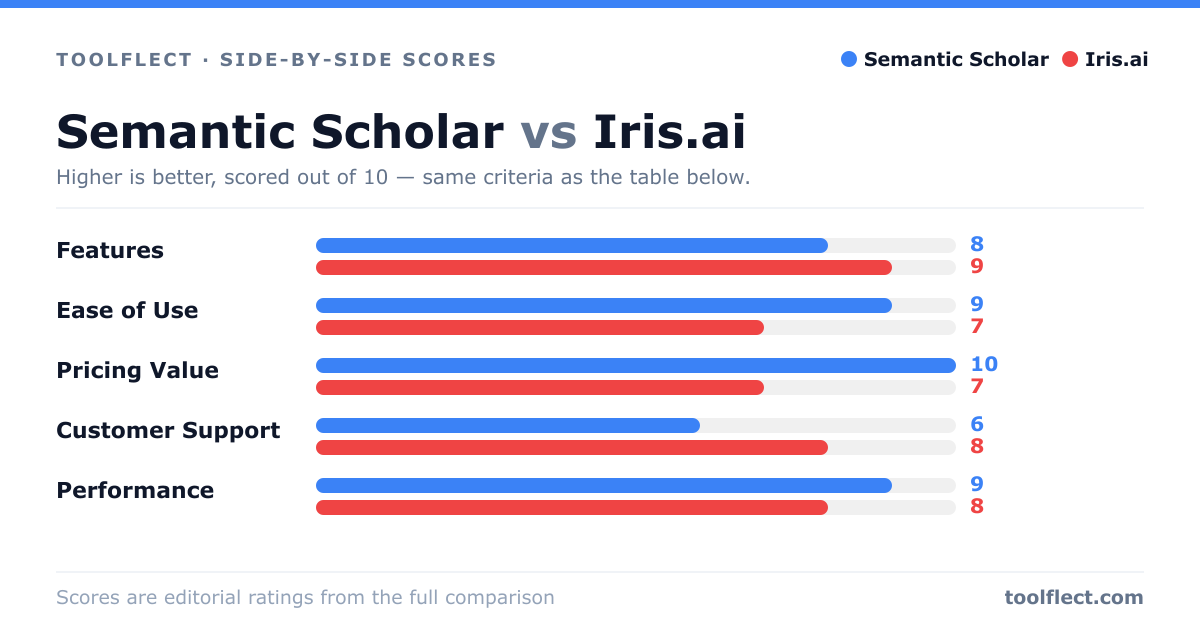
- Semantic Scholar: Semantic search, citation graphs, paper recommendations, API access (free), team features, and a built-in paper reader.
- Iris.ai: AI-powered literature filtering, concept-based search, reading list creation, auto-summaries, research workspace with folders, and collaborative features.
Pros & Cons
Semantic Scholar
Pros: Completely free; strong citation analysis; excellent search relevance; API available.
Cons: Limited project organization; no collaborative workspace; customer support is minimal.
Iris.ai
Pros: Intuitive research workspace; concept-based filtering saves time; good auto-summaries; supports team collaboration.
Cons: Free tier has limited daily searches; premium plans can be costly; learning curve for advanced features.
Pricing Comparison
Semantic Scholar is entirely free for all users. Iris.ai offers a free tier (up to 100 searches per month, limited workspace) and paid plans starting at $15/month for individuals with unlimited searches and additional features.
Best Use Cases
Semantic Scholar: Best for quick literature searches, citation tracking, and when budget is a concern. Ideal for students and researchers who need fast, reliable paper discovery without extra organization tools.
Iris.ai: Best for in-depth research projects requiring extensive literature organization, concept mapping, and collaboration. Suitable for PhDs, research teams, and systematic reviews.
Verdict
Choose Semantic Scholar if you need a powerful, free search engine with robust citation analysis. Choose Iris.ai if you need a comprehensive research workspace to manage and filter large volumes of literature, and if your budget allows for a paid subscription. Both are valuable, but the right choice depends on your workflow and budget.
Visual Comparison