
Quizlet AI vs Socratic: Which AI Tutoring Tool Wins?
Overview
Quizlet AI and Socratic are two popular AI-powered study tools that aim to help students learn more effectively. Quizlet AI, integrated into the Quizlet platform, offers features like Q-Chat, Magic Notes, and AI-powered flashcards. Socratic, acquired by Google, uses advanced AI to provide step-by-step explanations for homework questions across various subjects. This comparison examines their features, pricing, and overall value to help you decide which tool suits your needs.
Key Features Comparison
- Quizlet AI: Includes Q-Chat for conversational learning, Magic Notes for converting notes into study sets, AI-enhanced flashcards, and personalized study plans. Supports multiple languages and integrates with Quizlet’s existing library of user-generated content.
- Socratic: Offers photo-based question input, step-by-step solutions with explanations, coverage of math, science, history, and more. Uses Google AI to provide visual explanations, videos, and curated resources. No need to create accounts for basic use.
Pros & Cons
Quizlet AI
- Pros: Extensive library of user-generated flashcards and study sets; AI-powered explanations and practice tests; gamified learning modes (e.g., Quizlet Live) increase engagement; free tier with essential features.
- Cons: AI features limited to premium subscription; some user-generated content may be inaccurate; less effective for complex problem-solving in STEM; interface can be cluttered with ads on free version.
Socratic
- Pros: Free to use with no ads; AI-powered step-by-step explanations for math, science, and more; supports photo-based question input; integrates with Google AI for accurate answers.
- Cons: Limited to core subjects (math, science, history, etc.); lacks gamification and social features; no flashcard or spaced repetition system; explanations may be too brief for deep learning.
Quizlet AI
- Pros: Extensive library of user-generated flashcards and study sets; AI-powered explanations and practice tests; gamified learning modes (e.g., Match, Gravity) for engagement; free tier with robust features.
- Cons: AI explanations can be shallow for complex topics; premium subscription required for advanced features like Q-Chat; user-generated content may contain errors; limited support for non-English languages.
Socratic
- Pros: Uses Google AI to provide step-by-step explanations for math, science, and more; supports photo-based question input; clean, intuitive interface; free to use with no ads.
- Cons: Limited to certain subjects (primarily STEM); may struggle with handwritten or complex problems; lacks interactive practice and gamification; no web version, only mobile app.
Quizlet AI
- Pros: Extensive library of user-generated flashcards and study sets; AI-powered explanations for complex concepts; gamified learning modes (e.g., Match, Gravity) increase engagement; free tier available with basic features.
- Cons: AI features require a paid subscription (Quizlet Plus); quality of user-generated content varies; limited subject coverage for advanced topics; no direct step-by-step problem solving for math or science.
Socratic
- Pros: Free to use with no ads; AI-powered visual recognition for math and science problems; step-by-step explanations from trusted sources; supports multiple subjects including history and literature.
- Cons: Limited to mobile app (iOS/Android); no web version; explanations may not cover all problem types; requires clear images for accurate recognition.
Quizlet AI
Pros: Comprehensive study toolkit, interactive AI tutor (Q-Chat), customizable study sets, large community content. Cons: Many advanced features require a paid subscription, limited free tier, learning curve for new users.
Socratic
Pros: Completely free, excellent for quick homework help, intuitive photo recognition, reliable step-by-step solutions. Cons: No long-term study planning, limited to question-answering, less effective for memorization or review.
Pricing Comparison
- Quizlet AI: Free tier includes basic flashcard creation and limited Q-Chat usage. Quizlet Plus ($35.99/year) unlocks ad-free experience, offline access, advanced AI features like Magic Notes, and unlimited Q-Chat.
- Socratic: Entirely free with no subscription required. All features are accessible without payment, making it highly accessible for students on a budget.
Best Use Cases
- Quizlet AI: Ideal for students who need a comprehensive study system for exam preparation, including flashcards, practice tests, and interactive tutoring. Best for subjects requiring memorization (e.g., languages, vocabulary, science terms).
- Socratic: Perfect for students who need immediate assistance with homework problems, especially in math and science. Great for quick explanations and understanding concepts on the go.
Verdict
Both tools excel in different areas. If you prefer a free, no-fuss homework helper, Socratic is unbeatable. If you want a robust, all-in-one study platform with AI-driven features to build long-term knowledge, Quizlet AI offers more depth despite its price. Choose based on your primary learning goals: quick answers versus sustained study.
Visual Comparison
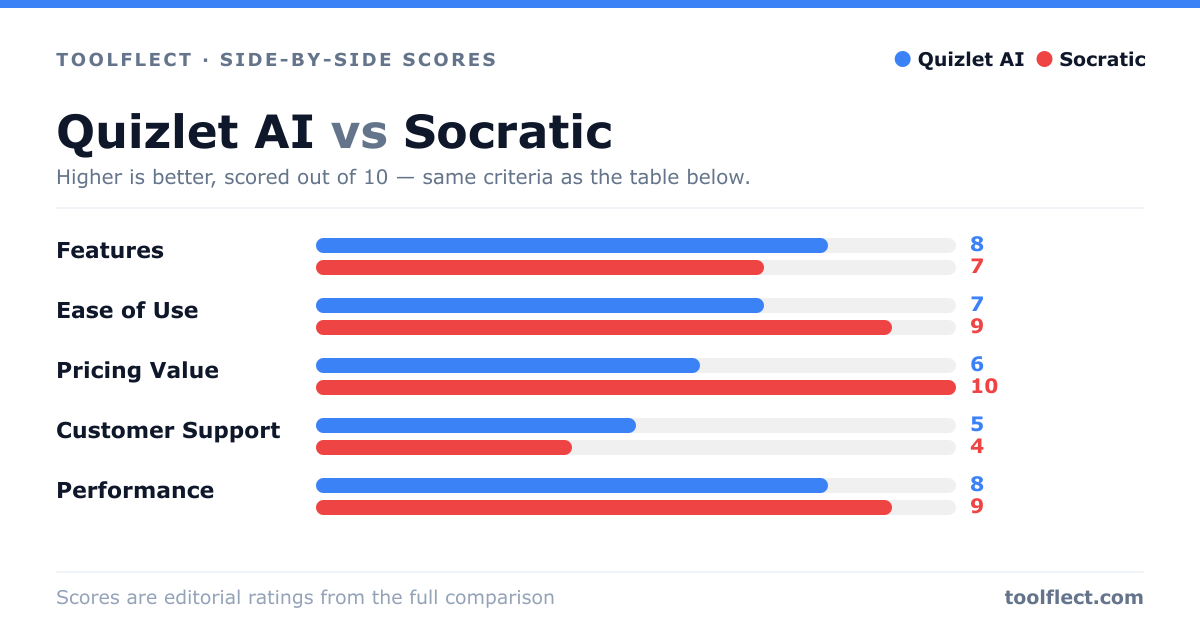
| Criterion | Quizlet AI | Socratic |
|---|---|---|
| Features | 8/10 – Flashcards, practice tests, AI explanations, games | 7/10 – Photo Q&A, step-by-step solutions, subject coverage |
| Ease of Use | 7/10 – Intuitive but cluttered with ads | 9/10 – Simple interface, easy photo input |
| Pricing Value | 6/10 – Free tier limited, premium $7.99/mo | 10/10 – Completely free |
| Customer Support | 5/10 – Email and help center, slow response | 4/10 – No direct support, relies on FAQ |
| Performance | 8/10 – Reliable, fast, but AI can be inconsistent | 9/10 – Accurate AI, quick responses |