
Calm AI vs Woebot: Which AI Mental Health Tool Wins?
Overview
Calm AI and Woebot are two prominent AI-driven mental health applications, but they serve different purposes. Calm AI is an extension of the popular meditation and sleep app Calm, integrating AI to personalize mindfulness exercises and sleep stories. Woebot, on the other hand, is a chatbot designed to provide cognitive behavioral therapy (CBT) techniques through conversational interactions. This comparison will help you decide which tool aligns with your mental wellness needs.
Key Features Comparison
- Calm AI: Personalized meditation sessions, sleep stories, breathing exercises, mood tracking, and AI-generated content based on user preferences.
- Woebot: CBT-based conversations, mood tracking, thought challenging, and daily check-ins. It uses natural language processing to simulate therapeutic conversations.
Pros & Cons
Calm AI
- Pros: Extensive library of guided meditations and sleep stories; AI-powered personalized recommendations; high-quality audio production; strong brand reputation.
- Cons: Primarily meditation-focused, not a dedicated therapy tool; subscription required for full access; limited interactive conversation compared to Woebot.
Woebot
- Pros: Evidence-based CBT techniques; interactive conversational interface; free to use; designed specifically for mental health support.
- Cons: Text-based only, no audio or video; limited to CBT framework; may not be suitable for severe mental health conditions.
Calm AI
- Pros: Extensive library of guided meditations and sleep stories; AI-powered personalized recommendations; high-quality audio production; strong brand reputation.
- Cons: AI features are limited compared to dedicated chatbots; requires subscription for full access; less interactive for real-time emotional support.
Woebot
- Pros: Evidence-based CBT techniques; conversational AI that engages users in real-time; free to use; specifically designed for mental health support.
- Cons: Text-based only, no audio or video; limited to CBT framework; may not be suitable for severe mental health conditions; requires consistent usage for best results.
Calm AI
- Pros: Extensive library of guided meditations and sleep stories; AI-driven personalized recommendations; high-quality audio production; strong brand reputation.
- Cons: Subscription cost is relatively high; AI features are limited compared to dedicated mental health chatbots; focus is more on general wellness than clinical support.
Woebot
- Pros: Evidence-based CBT techniques; conversational AI that engages users in daily check-ins; free to use; accessible via mobile app.
- Cons: Limited to text-based interactions; not a substitute for professional therapy; may feel repetitive over time; lacks multimedia content.
Calm AI
- Pros: High-quality audio content, extensive library, user-friendly interface, good for stress reduction and sleep improvement.
- Cons: Not a substitute for therapy, limited interactive conversation, requires subscription for full access.
Woebot
- Pros: Evidence-based CBT techniques, interactive and engaging, free to use, available 24/7.
- Cons: Text-based only, limited to CBT (not suitable for severe mental health conditions), may feel repetitive over time.
Pricing Comparison
- Calm AI: Subscription-based: $14.99/month, $69.99/year, or $399.99 lifetime. Free trial available.
- Woebot: Free to use, with no premium tiers currently.
Best Use Cases
- Calm AI: Ideal for individuals seeking relaxation, better sleep, and mindfulness practices. Great for stress management and general well-being.
- Woebot: Suitable for those who want structured CBT exercises, mood tracking, and a conversational tool to challenge negative thoughts. Good for mild to moderate anxiety and depression.
Verdict
Both tools have their strengths. Calm AI excels in providing a serene, content-rich experience for relaxation and sleep, while Woebot offers a more interactive, therapeutic approach grounded in CBT. If you prefer guided meditation and sleep aids, choose Calm AI. If you want a free, conversational tool to work on your thoughts, Woebot is the better choice. For comprehensive mental health support, you might consider using both in conjunction.
FAQ
Is Calm AI a replacement for therapy?
No, Calm AI is not a replacement for therapy. It is a wellness tool that can complement professional treatment, but it does not provide diagnosis or personalized therapy.
Can Woebot diagnose mental health conditions?
No, Woebot is not a diagnostic tool. It uses CBT techniques to help users manage symptoms, but it cannot diagnose or treat severe mental health disorders.
Which app is better for anxiety?
Both can help with anxiety. Calm AI offers relaxation techniques and mindfulness, while Woebot provides CBT exercises to challenge anxious thoughts. The choice depends on your preferred approach.
Are Calm AI and Woebot available on both iOS and Android?
Yes, both apps are available on iOS and Android platforms.
Visual Comparison
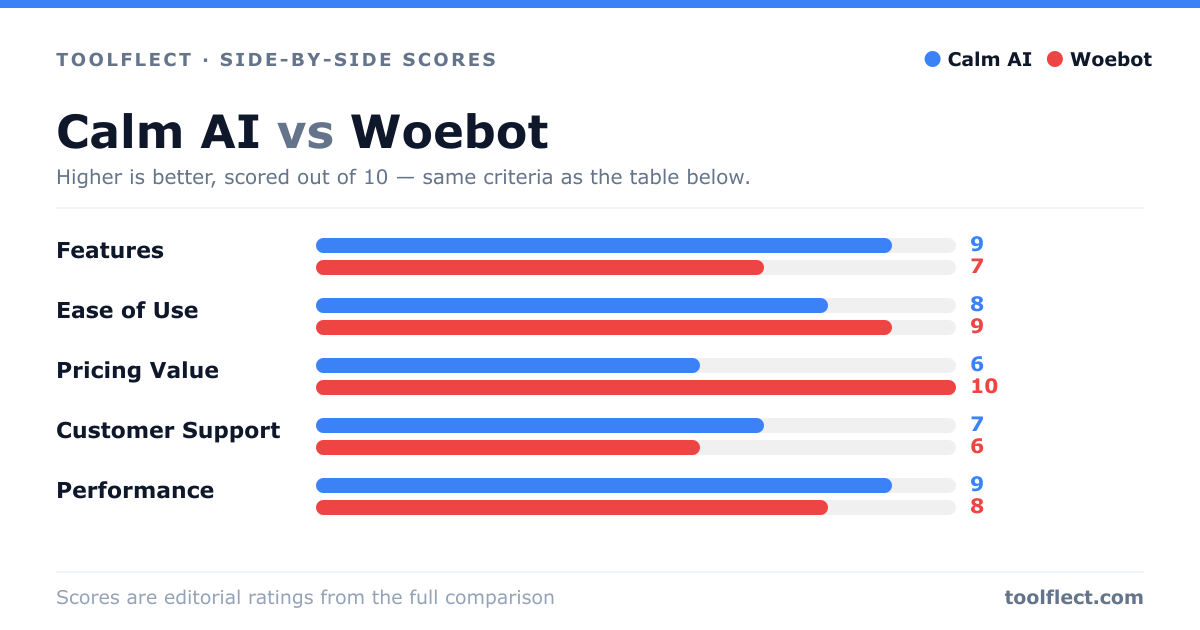
| Criterion | Calm AI | Woebot |
|---|---|---|
| Features | 8/10 – Meditation, sleep, music, and AI recommendations | 7/10 – CBT-based conversations, mood tracking, and check-ins |
| Ease of Use | 9/10 – Intuitive app with polished UI | 8/10 – Simple chat interface, easy to navigate |
| Pricing Value | 6/10 – Subscription cost may be high for some | 9/10 – Free to use, excellent value |
| Customer Support | 7/10 – Email and help center, responsive | 6/10 – Limited support, primarily in-app resources |
| Performance | 8/10 – Reliable, high-quality content | 8/10 – Effective for mild to moderate issues |